

.png)
Automotive interior manufacturers produce specialized upholstery materials used in cars, trucks, commercial vehicles, and transportation fleets. Their products must meet strict performance, safety, and durability standards. These materials are used for seat covers, door panels, dashboards, headliners, and trim accents. Most manufacturers manage large catalogs of fabric, leather, vinyl, composites, and technical laminates that vary by grain, weight, thickness, color, and compliance requirements.
This industry operates at a high level of specification and regulation. Buyers rely on accurate technical documentation, test results, and sometimes certifications before materials can be approved for production. Because customers often order in bulk and require precision, automotive interior manufacturers lean on structured digital catalogs, quoting workflows, and detailed product pages to help buyers make confident sourcing decisions.
Automotive interior manufacturers primarily serve B2B organizations that need materials for vehicle production, prototyping, or refurbishment. Their customers include:
These customers purchase based on specifications and long term viability rather than retail browsing. They require stable supply chains, accurate data, and consistent material performance.
Automotive upholstery distribution rarely provides transparent pricing on product pages. Most companies require buyers to:
There are good reasons for this.
Material pricing varies by volume, finishing requirements, compliance needs, and long term contract agreements. A single buyer may order thousands of yards over the course of a vehicle program. This makes ecommerce checkout less practical and makes quote driven workflows more important.
Shopify supports this model with features like:
This provides buyers with a modern digital experience while still maintaining the traditional B2B pricing model.
Automotive interior brands typically use Shopify as a digital catalog and specification management system with controlled access for B2B buyers. Below are the core ways Shopify supports their workflow.
Automotive upholstery materials require extensive data. Manufacturers use Shopify PDPs to display:
These PDPs act as digital spec sheets that procurement teams and designers can evaluate before requesting samples or quotes.
Automotive material suppliers often organize their websites by end use to help buyers find relevant products.
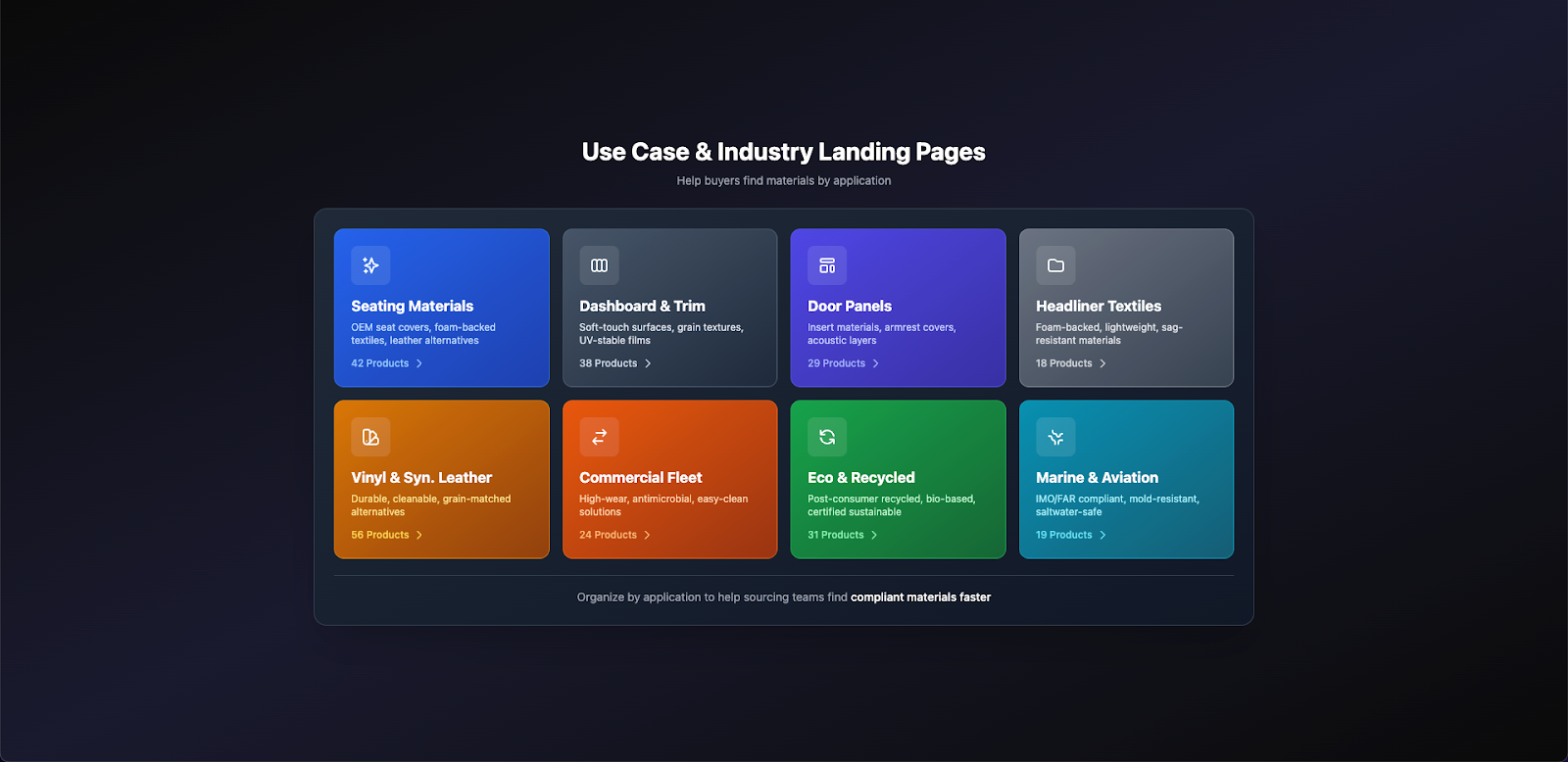
Common landing pages include:
These pages help sourcing teams quickly find materials that meet specific regulations or design requirements.
Automotive buyers need trust and proof of capability. Case studies are a standard part of marketing for upholstery manufacturers.
Examples include:
Shopify supports case study pages with flexible content sections, asset galleries, and downloadable PDFs.
Even in automotive manufacturing, physical evaluation is required before production. Shopify supports sample workflows through:
Once samples are evaluated, buyers can return to the PDP and request a quote for larger volumes.
Many automotive manufacturers use Shopify to show products only to approved buyers. They may hide:
Shopify B2B access controls support:
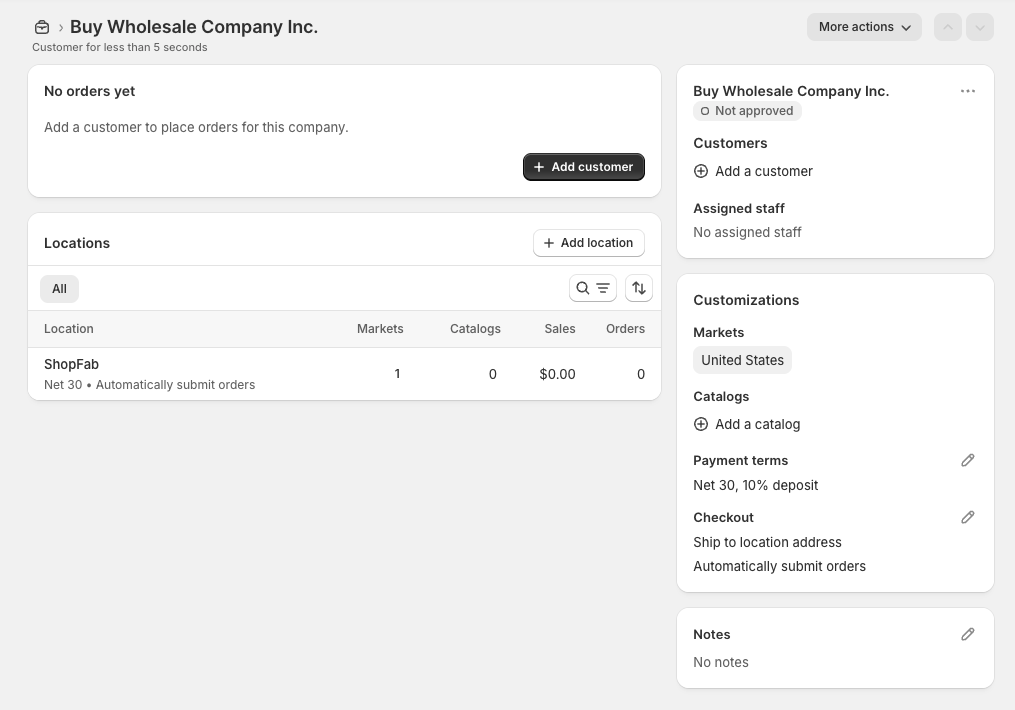
This provides a secure environment where sensitive technical assets are available only to verified partners.
Because most programs require a quoting stage, Shopify handles this through:
This allows the manufacturer to maintain the quoting workflow while still offering a smooth digital experience.
Automotive interior manufacturers rely on detailed product information, controlled access, and quote based purchasing. Shopify gives them a flexible platform for displaying technical specifications, enabling sample requests, organizing material categories, and supporting sales rep driven workflows. For an industry where precision matters and pricing depends on volume and compliance, Shopify provides the structure needed to modernize upholstery distribution while keeping traditional B2B processes intact.

.png)
