Textile manufacturers sell complex products with multiple variations, technical specifications, and different requirements for retail and wholesale buyers. Buyers need clear access to colorways, yardage options, and performance data, whether they are ordering online or working with a sales rep in a showroom. Shopify supports these workflows with flexible B2B features, structured product data, and multi channel inventory syncing.

This guide breaks down how textile manufacturers use Shopify to manage wholesale catalogs, run showrooms, create PDPs with technical depth, and support both online and in person selling.

Who Textile Manufacturers Are and Who They Serve

Textile manufacturers produce fabrics, materials, and specialized textiles used across many industries. They work with natural fibers, synthetics, blends, and recycled materials to create products that range from upholstery fabrics to technical performance textiles. Their operations often include weaving, knitting, dyeing, finishing, coating, and pattern development.

Because textiles are used in many applications, manufacturers typically serve a wide variety of customers across both B2B and B2C channels.

Common Customers of Textile Manufacturers

  • Interior designers
  • Furniture manufacturers
  • Hospitality firms such as hotels and resorts
  • Architectural firms that specify materials
  • Apparel and fashion brands
  • Footwear brands
  • Automotive and transportation companies
  • Aviation and marine interiors
  • Healthcare providers needing medical grade fabrics
  • Industrial companies with performance requirements
  • Decor and home goods brands
  • Contract textile distributors
  • Wholesalers supplying regional markets

Why Their Customer Mix Matters for eCommerce

These customers often require:

  • Access to detailed technical specifications
  • Swatches or memo samples
  • Colorway and pattern filtering
  • Bulk or roll based ordering
  • Pricing tiers based on trade status
  • Project based workflows
  • Custom finishing services
  • Sales rep support for sourcing and approvals

This variety makes textile eCommerce more complex than typical retail. Shopify provides the flexibility to handle multiple buyer types, product structures, and ordering methods within one system.

Wholesale Ordering Built Into Shopify

Wholesale buyers expect straightforward ordering, accurate stock information, and access to their approved pricing. Shopify supports this with customer groups, B2B pricing, and unit based ordering.

Customer Accounts With Tiered Pricing

Manufacturers can assign buyers to groups such as designers, distributors, export partners, or large brands. Each group can have its own pricing or purchasing rules.
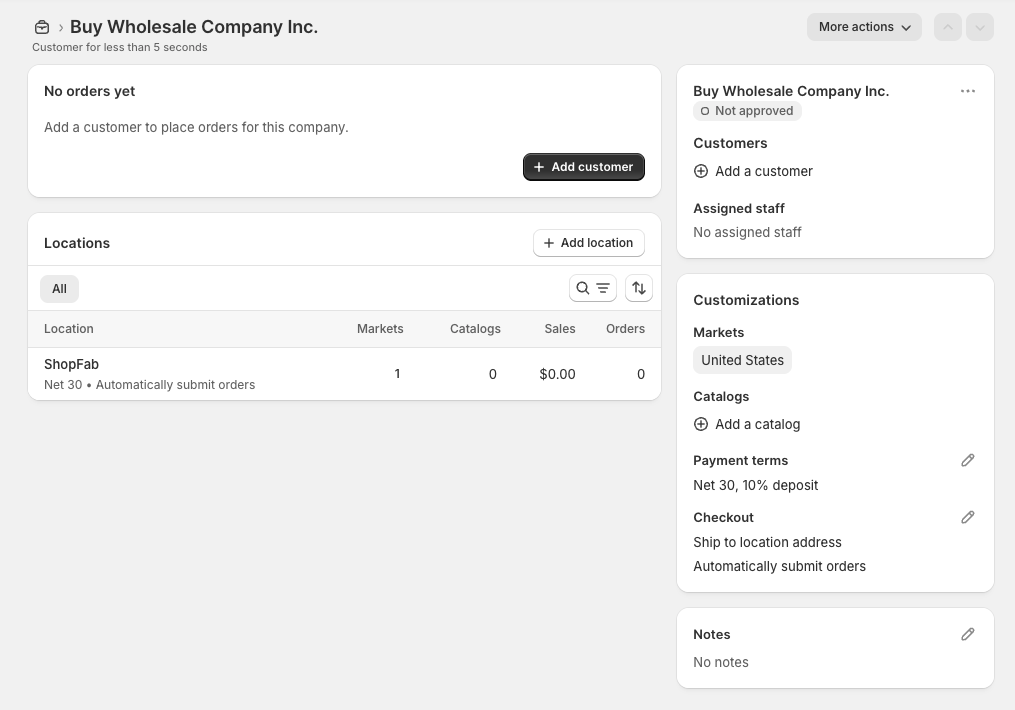
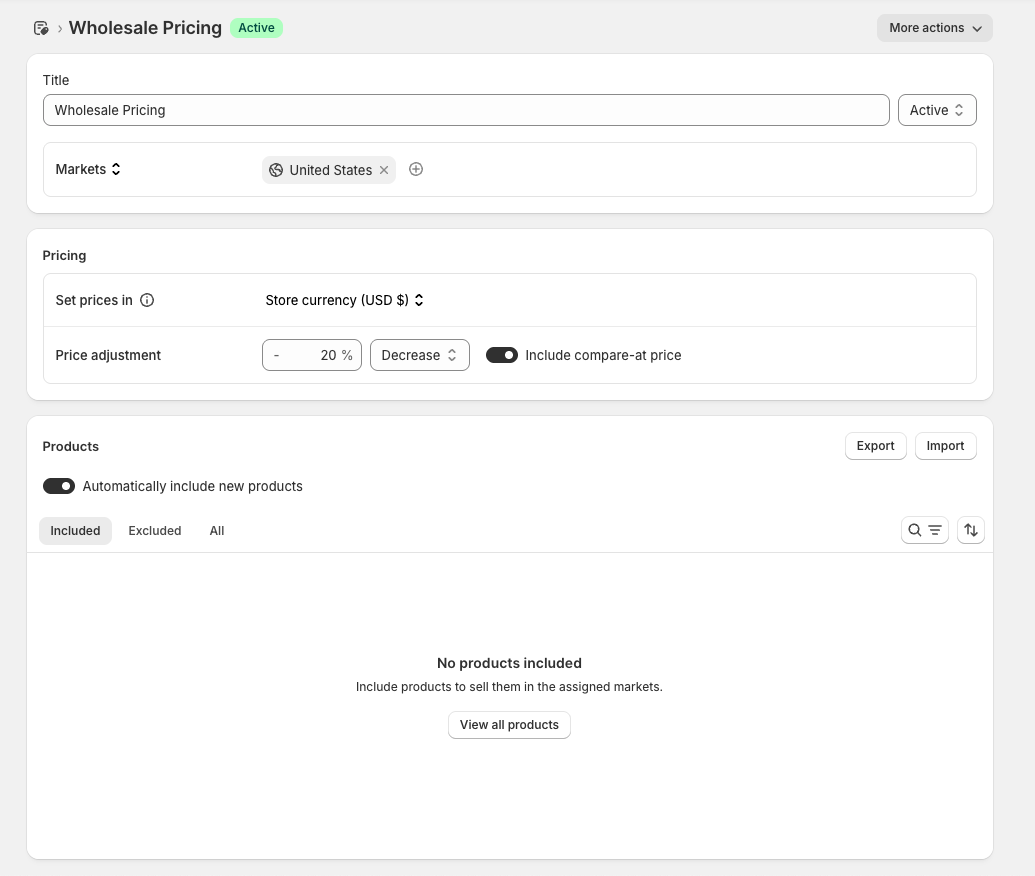
Shopify Plus B2B Company or Customer Profile
Shopify Plus B2B Catalog Creation for B2B Customers

MOQ and Yardage Based Ordering

Textile buyers often order by yard, meter, or full roll. Shopify supports:

  • Minimum yardage settings
  • Increment controls
  • Roll based variants
  • Dynamic unit pricing

Color and Pattern Variants

Manufacturers can present colorways and patterns without creating hundreds of duplicate products.
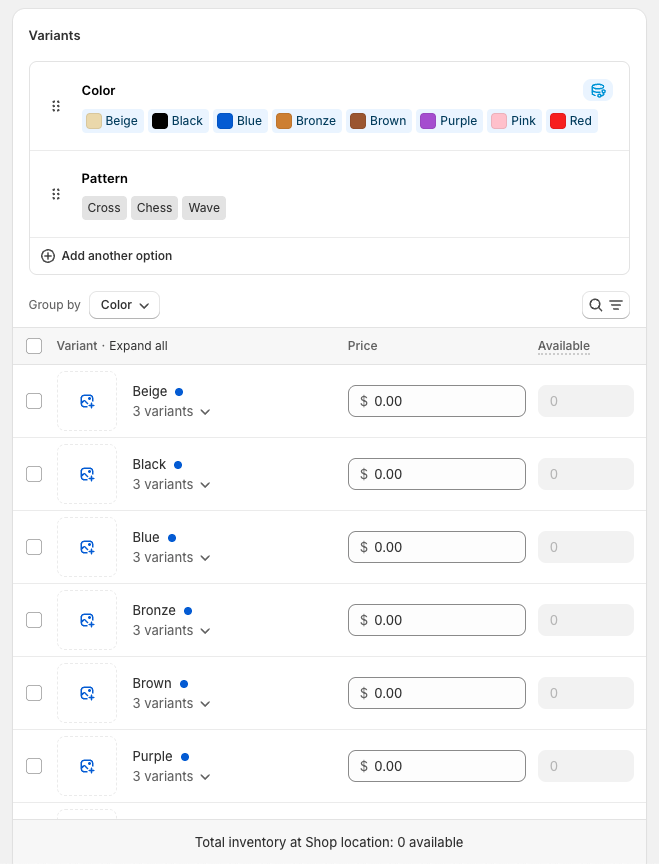
Shopify Plus B2B Multiple Variant Creation

What Textile Manufacturers Show in the Top Fold of a PDP

Textile PDPs require clarity at the top of the page because professional buyers want to evaluate price, color, yardage, and sampling options quickly. Below is a list of the elements textile companies typically show above the fold.
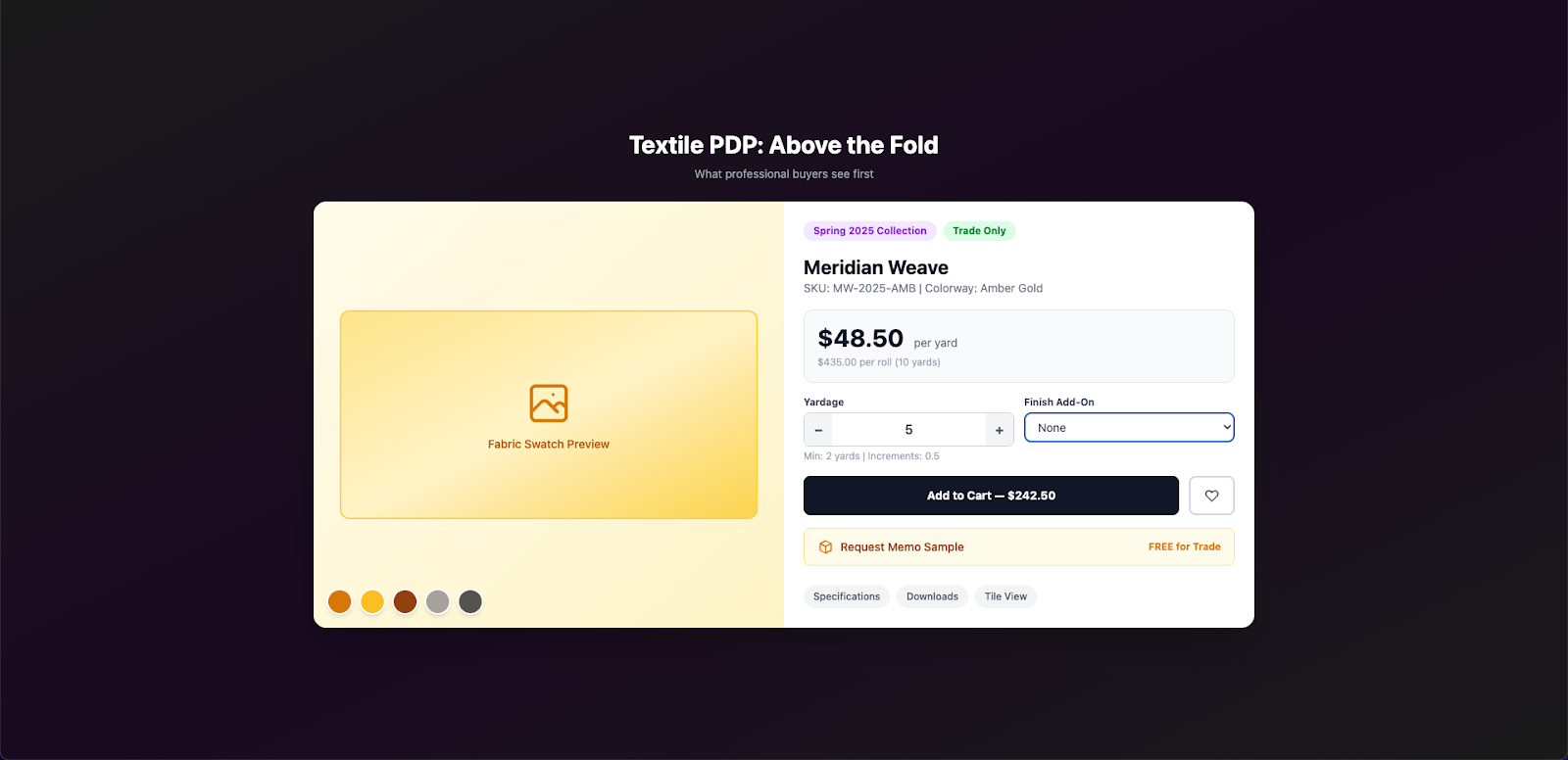
Price Display

  • Price per yard or meter
  • Price per roll if offered
  • Clear unit explanation

Color Selection

  • Colorway name
  • Reference or color code
  • Swatch selector for quick changes
  • Optional hover or zoom preview

Sample Request Options

  • Memo sample button
  • Free sample indicator for trade accounts
  • Sample size description

Yardage or Roll Ordering

  • Yardage input field
  • Half yard or incremental options
  • Minimum order quantities
  • Unit selection when applicable

Quantity Controls

  • Simple unit selector
  • Automatic calculation when yardage and quantity combine

Finish Enhancements

  • Optional backing, coating, or treatment
  • Add on selection menu
  • Price adjustments shown clearly

Primary Actions

  • Add to cart
  • Add to quote or draft order for wholesale
  • Save to project or favorites

Quick Navigation Tabs

Placed visually near the top to avoid clutter.

  • Specifications
  • Sample card
  • Tileable swatch preview
  • Downloadable spec sheets

Private Wholesale Catalogs and Flex Collections

Textile manufacturers often release seasonal collections and private assortments exclusively for trade customers. Shopify makes these easy to manage with customer specific visibility.

Private Collections

  • Seasonal lookbooks
  • Exclusive fabric lines
  • Partner specific assortments
  • Reorder only catalogs

Dynamic Catalogs Based on Buyer Type

Different buyer groups see different assortments such as upholstery grade fabrics for furniture makers or apparel fabrics for fashion houses.

Showroom Sales Powered by Shopify POS

Showrooms remain essential for textile brands since buyers rely on tactile evaluation. Shopify POS supports in person ordering through real time inventory syncing and custom order tools.

Real Time Inventory in the Showroom

Reps can confirm roll availability or yardage immediately while standing with the buyer.

Draft Orders for Custom Requests

When buyers select multiple fabrics or request finishing services, reps can build draft orders on the spot.
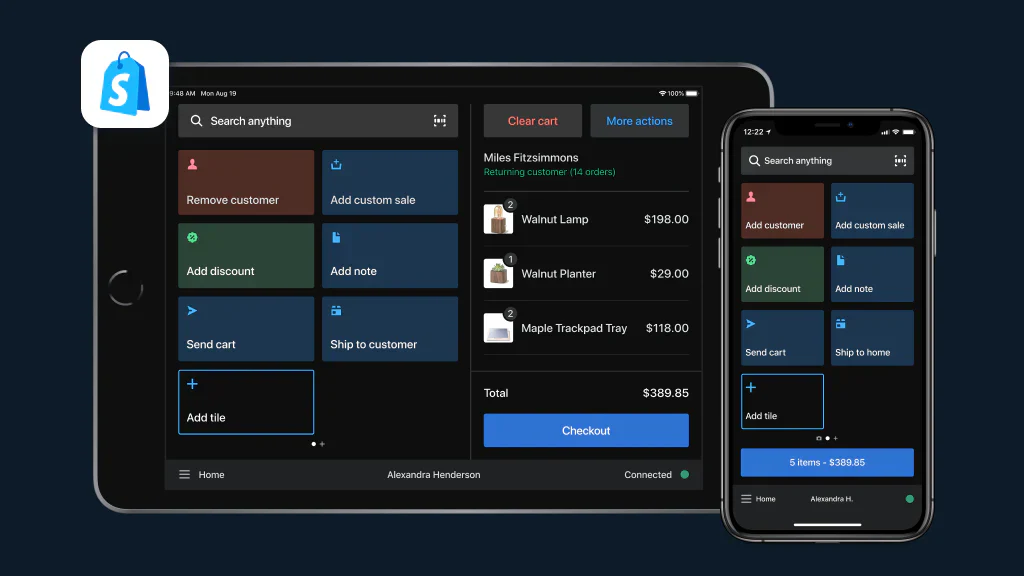
Shopify POS in Tablet and Mobile

Sample Tracking

Showroom teams can log sample requests and follow up with buyers who take swatches or memo cards.

Line Sheets, Seasonal Drops, and Digital Catalogs

Textile manufacturers often use line sheets, spec sheets, and PDF color cards. Shopify consolidates these materials into one structured digital experience.

Online Line Sheets

Brands can publish:

  • Color cards
  • Pattern books
  • Seasonal collections
  • Fabric spec sheets

Detailed Specification Sections for Textile PDPs

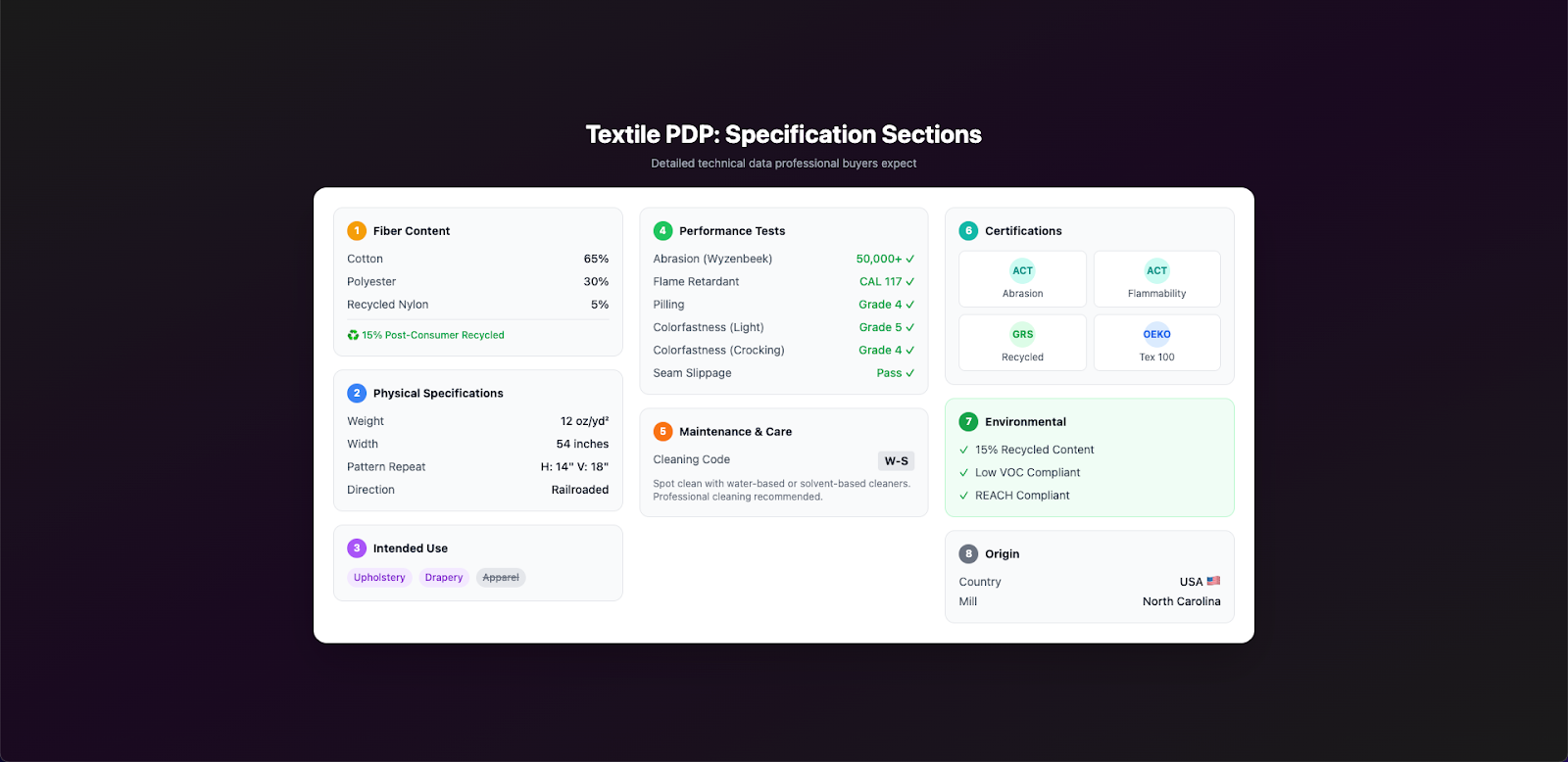
Textile buyers expect deep technical details. Below is a list of what manufacturers can add to a spec section on Shopify product pages.
Product Description Details

  • Material story or sustainability notes
  • Construction details
  • Texture and color information
  • Coordination notes for color palettes

Collection Information

  • Collection name
  • Related patterns or coordinating textiles

Intended Use

  • Upholstery
  • Drapery
  • Apparel
  • Multi use categories

Fiber Content

  • Full fiber breakdown with percentages
  • Recycled or reclaimed inputs
  • Pre consumer and post consumer details

Environmental and Compliance

  • Recycled content
  • Renewable content
  • Chemical compliance
  • Sustainability certifications

Physical Specifications

  • Weight per yard or gsm
  • Width
  • Pattern repeat
  • Directional notes
  • Finishes or coatings

Performance Tests

  • Abrasion results
  • Flame retardancy
  • Breaking strength
  • Seam slippage
  • Pilling
  • Colorfastness to light
  • Colorfastness to crocking

Maintenance and Care

  • Cleaning code
  • Cleaning instructions
  • Handling notes

Additional Notes

  • Natural fiber variation
  • Dye lot expectations

Country of Origin

  • Manufacturing country or mill location

Certifications

  • ACT Performance Icons
  • Other third party standards

Multi Channel Inventory Syncing for Textile Warehouses

Textile businesses manage inventory across multiple locations such as warehouses, showrooms, and finishing rooms. Shopify keeps these locations synced.

Track Multiple Stock Sources

  • Warehouse rolls
  • In production yardage
  • Sample inventory
  • Reserved stock

ERP and PIM Integrations

Shopify integrates with systems that store:

  • Roll numbers
  • Lot tracking
  • Technical data
  • High volume product attributes

Sales Rep Tools for B2B Textile Selling

Sales reps often manage accounts directly. Shopify supports this workflow with tools for on site or remote selling.

Rep Accounts

Reps view only their assigned buyers and can place orders on their behalf.

Quick Order Forms

Ideal for repeat buyers with predictable needs.

Mobile Ordering

Reps can create orders on tablets during showroom visits or client meetings.

Payments, Terms, and Invoicing for B2B Buyers

Textile buyers often work with terms, deposits, or traditional invoicing workflows. Shopify supports multiple payment structures.

Supported Payment Methods

  • Net terms
  • Bank transfers
  • Offline invoices
  • Card payments
  • Deposit collection

Automated Invoicing

Wholesale invoices can be sent automatically after order creation.

Conclusion

Shopify provides textile manufacturers with a comprehensive platform for wholesale, showroom, and multi channel sales. From detailed technical PDPs to private catalogs and ERP connected inventory management, Shopify supports the full textile buying process across every channel. Buyers enjoy a consistent experience, and manufacturers gain a centralized system that simplifies complex product data and ordering workflows.